Our articles are not designed to replace medical advice. If you have an injury we recommend seeing a qualified health professional. For more information see our Terms and Conditions.
How you test strength makes a big difference to results!!
A recent study by Brady Green and colleagues compared 2 different testing approaches for the Single Leg Heel Raise test in 51 Australian football players (Green et al. 2024).
One approach was simply to repeat the test until the athletes reached volitional failure (they weren’t able to do any more). The second approach standardised range and speed and used cues to maintain technique.
The results were very different between the 2 approaches!
The average number of reps achieved in the first approach (without cues/ standardisation) was 34, whereas in the standardised approach, it was just 22!
The likely reason is if we only use volitional failure as the marker then people will alter range, speed or technique to achieve higher numbers. Once we standardise it the test is more likely to specifically challenge the calf muscles.
Here are 5 tips to standardise your calf testing and improve results:

These same tips can be applied to rehab exercises too:
- Use a metronome to guide pace and ensure adequate time under tension. For example 3 seconds for the concentric phase and 3 seconds for the eccentric phase as used in Heavy Slow Resistance training for Achilles tendinopathy.
- Encourage full range for mid-portion Achilles tendinopathy to maximise tendon load. Reduce painful loading into dorsiflexion for insertional Achilles tendinopathy and plantaris involvement.
- Keeping the knee straight will challenge both the gastric and soleus. Bent knee calf raises are thought to preferentially challenge soleus although there is some debate about this in the literature.
- Cue to maintain technique to ensure the calf and Achilles are loaded sufficiently to improve strength and function. Compensations can shift the load elsewhere and reduce effectiveness. A telltale sign of this is when a patient reports fatigue in different muscle groups (such as hamstrings) before the calf.
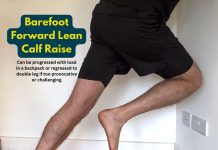
- Encourage barefoot calf raises if well tolerated as this is likely to strengthen the intrinsic foot muscles. If this is uncomfortable or painful then wearing shoes may be preferable and allow more loading.
Our Achilles video series explores calf testing and progressive rehab in detail, including sections on gait analysis, return to running and more.
One key point we explore in this series is that assessing reps to fatigue may not be a true strength test as endurance is required, especially as reps get higher. Heavier loading such as 6 Repetition Maximum testing with seated calf raise may be a truer test of strength.
In the videos, we discuss a strength testing battery for calf, quads, glutes and hamstrings including some surprising results from the literature…

Visit https://clinicaledge.co/freeachilles and input your details for free access to our Achilles masterclass